
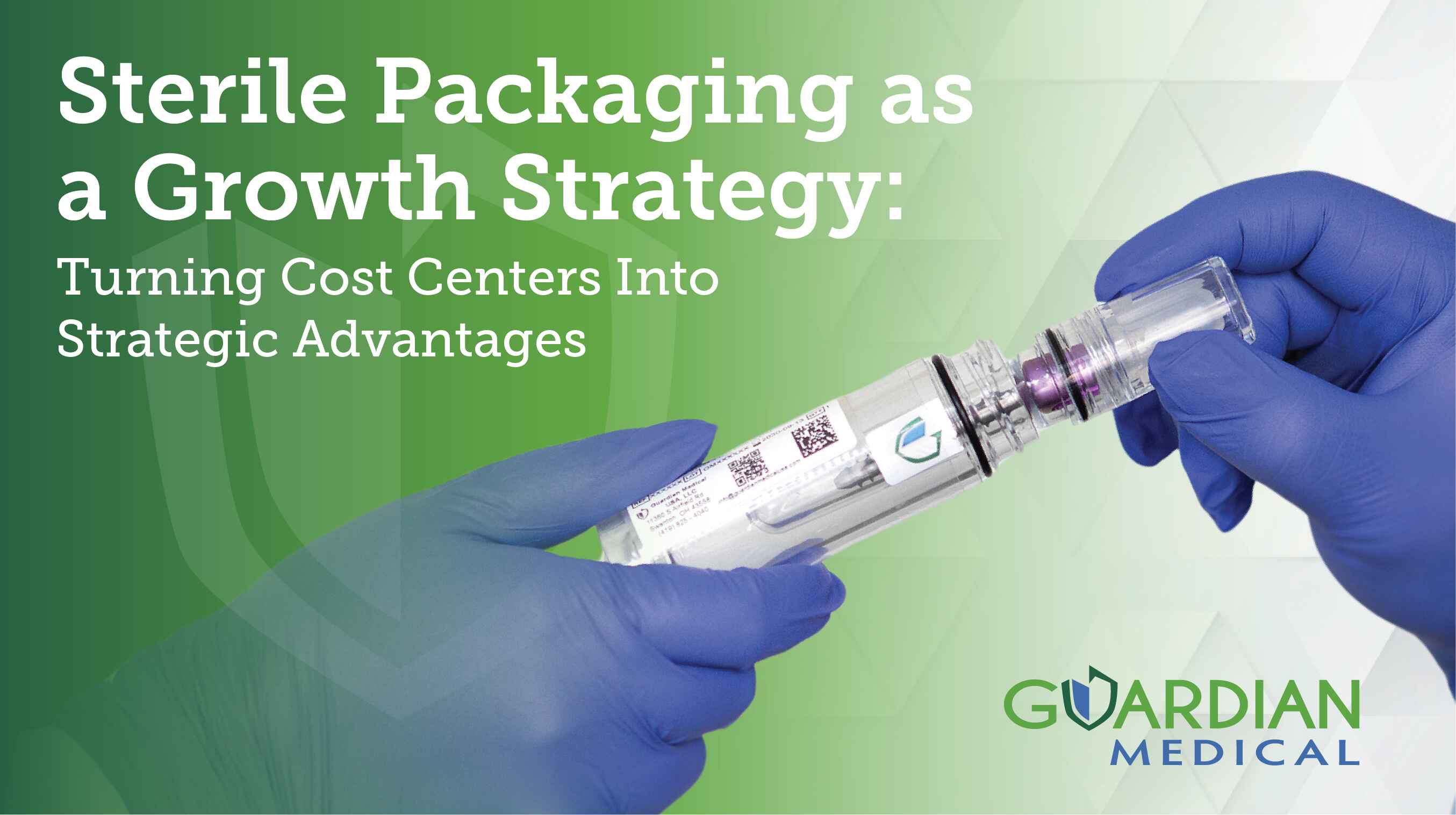
Sterile packaging has traditionally been viewed as a necessary burden: an unavoidable expense, a validation hurdle, a space constraint, and too often a source of costly delays. But that perception is changing. OEMs navigating supply chain constraints, rising costs, and pressure for faster market launches are discovering that sterile packaging has untapped strategic power.
When done right, sterile packaging becomes more than a protective shell. It becomes a growth advantage.In today’s orthopedic market, device performance is only part of the value proposition. How the implant arrives, is handled, and ultimately used in the OR can directly influence efficiency, cost, and patient safety. The opportunity lies in rethinking packaging not as overhead, but as an ecosystem that drives value across the entire implant lifecycle.
The Hidden Cost Centers of Traditional Sterile Packaging
Many in the industry still depend on legacy packaging formats, solutions never designed to meet today’s demands for safety, usability, traceability, or sustainability expectations. These legacy formats introduce downstream costs that compound quietly but consistently:
- High damage risk: Package breaches compromise sterility, leading to scrapped implants and surgical delays.
- Slow OR workflows: Bulky, multi-component systems slow identification, access, and aseptic transfer, increasing risk in high-stakes environments.
- Excessive footprint: Larger packages demand more shelf space, higher sterilization costs, and bigger logistics loads.
- Validation barriers: Sealing equipment, verification testing, and complex validation requirements extend project timelines and add cost.
- Supply chain vulnerability: Many traditional systems rely on materials prone to shortages and long lead times. These pain points aren’t isolated; they influence revenue predictability, operational efficiency, and the overall competitiveness of a product. And this is where packaging becomes a strategic differentiator.
From Liability to Advantage: Reframing Sterile Packaging’s Role
Forward-looking OEMs are recognizing that packaging can reinforce brand value, support market expansion, and improve user experience with safer outcomes. When packaging supports patient safety, enhances usability, reduces waste, and accelerates time-to-market, it becomes part of the strategic growth engine.
1. Faster Launches Through Pre-Validation
Speed to market is becoming a central competitive advantage, especially for companies developing new implant systems or expanding legacy portfolios. Traditional sterile barrier systems require heat sealing equipment validation, custom tooling development, ongoing testing, and material qualification.Pre-validated systems like CapSure™ remove those barriers. By leveraging an already-validated sterile barrier and seal design, OEMs can shorten development timelines, reduce the risk of validation failures, and reallocate internal resources to higher-value engineering work.
2. Operational Efficiency as a Market Differentiator
In the OR, seconds matter. Every delay or complication in identifying, opening, or transferring an implant aseptically introduces risk and erodes confidence. Packaging that improves OR workflow, through clear labeling, size/color coding, intuitive opening, and reliable aseptic transfer, directly improve surgeon and staff experience.Efficient packaging builds preference. Preference builds adoption. Adoption builds revenue.This is why OR usability has become a strategic priority in ISO 11607 requirements, not just a design consideration.
3. Footprint Reduction and System-Wide Cost Savings
A smaller, simplified package doesn’t just save shelf space; it reshapes the entire economic equation. Reduced footprint means:
- lower sterilization costs per batch
- reduced storage space requirements
- lighter, more efficient distribution
When multiplied across hundreds of SKUs and thousands of implants, these efficiencies significantly reduce operating expenses for OEMs and their customers. Guardian Medical’s data shows footprint reductions of 50–75% compared to trays and pouches, enabling OEMs to move more product through the same sterilization and storage infrastructure. This is end-to-end value chain efficiency, not incremental cost trimming.
4. Strength, Stability, and Long-Term Inventory Protection.
Sterile barrier integrity is the backbone of device reliability. Packaging that fails in transit compromises patient safety and leads directly to product loss. CapSure™ provides high-impact resistance mono-material structure without reliance on secondary packaging or bulky reinforcement.Add a validated 10-year shelf life, and OEMs can maintain and distribute broader SKU availability while reducing expired inventory write-offs, an often overlooked but significant contributor to operational costs.
5. Sustainability as a Competitive Advantage
Hospitals, Advanced Surgical Centers, and regulators are increasingly prioritizing waste reduction and recyclable materials. Packaging that reduces material waste, while supporting recyclability, helps OEMs meet environmental expectations without compromising performance.
Where Growth Strategy Meets Packaging Innovation
As implant systems become more advanced, the infrastructure surrounding them must evolve as well. Guardian Medical engineered CapSure™ as a response to the industry’s call for packaging that strengthens, not slows, the supply chain.CapSure™ illustrates how packaging can shift from cost center to competitive differentiator by offering:a pre-validated sterile barrier system that accelerates launchessmaller, lighter, high-durability packaging that lowers system costintuitive handling and industry leading aseptic transfer that improves OR efficiency, recyclable materials that align with modern sustainability goals a 10-year shelf life that stabilizes inventory planning These attributes create strategic lift across R&D, operations, supply chain, and marketing groups, an uncommon level of cross-functional value from what has traditionally been a static component of the product lifecycle.
The Bottom Line
Packaging has outgrown its role as a protective afterthought. In an environment where cost pressures are high, supply chains strained, and OR expectations rising, the right packaging system can:
- reduce risk
- accelerate revenue
- strengthen surgeon preference
- lower operational cost
- differentiate the device in a crowded market
As OEMs look toward growth in 2026 and beyond, those who treat packaging as a strategic asset, not a fixed cost, will gain a measurable advantage. If you’d like help shaping packaging strategy for your next launch or portfolio refresh, the Guardian Medical team is here to support your goals with solutions designed for performance, reliability, and efficiency.
